CALL FOR PAPERS 2026

CONGRESS PRESENTATION

The International Congress of Fantastic Genre, Audiovisuals and New Technologies is an annual scientific, educational and outreach event held annually since 2018 within the framework of the Elche International Fantastic Film Festival – FANTAELX. It is organised by the Association for the Development and Promotion of Fantastic Genre “Black Unicorn”, in collaboration with Miguel Hernández University of Elche, the Research Centre for the Arts (CíA) and the MASSIVA Research Group.

This is a well-established forum whose mission is to promote and disseminate academic research across the various thematic strands and discourses of the fantastic genre from an interdisciplinary perspective, covering fields such as Art History, Film Studies, Literary Studies, New Technologies and other related fields, while embracing all forms of artistic and cultural expression, such as cinema, television, theatre, literature, comics, video games, role-playing games, virtual reality, plastic arts, etc.

The ninth edition of the International Congress of Fantastic Genre, Audiovisuals and New Technologies will take place on 17, 18, 19 and 20 November 2026. Sessions on 17 and 18 November will be held online via the Congress’s YouTube channel, while sessions on 19 and 20 November will take place in person at the Auditorium of the Congress Centre “Ciutat d’Elx” (see map).

THEMATIC AREAS OF PARTICIPATION

OPTION 1

In this modality, the proposals submitted will follow the main thematic line of the new edition of the Congress and the Festival: The origins of the fantastic genre in audiovisual culture.

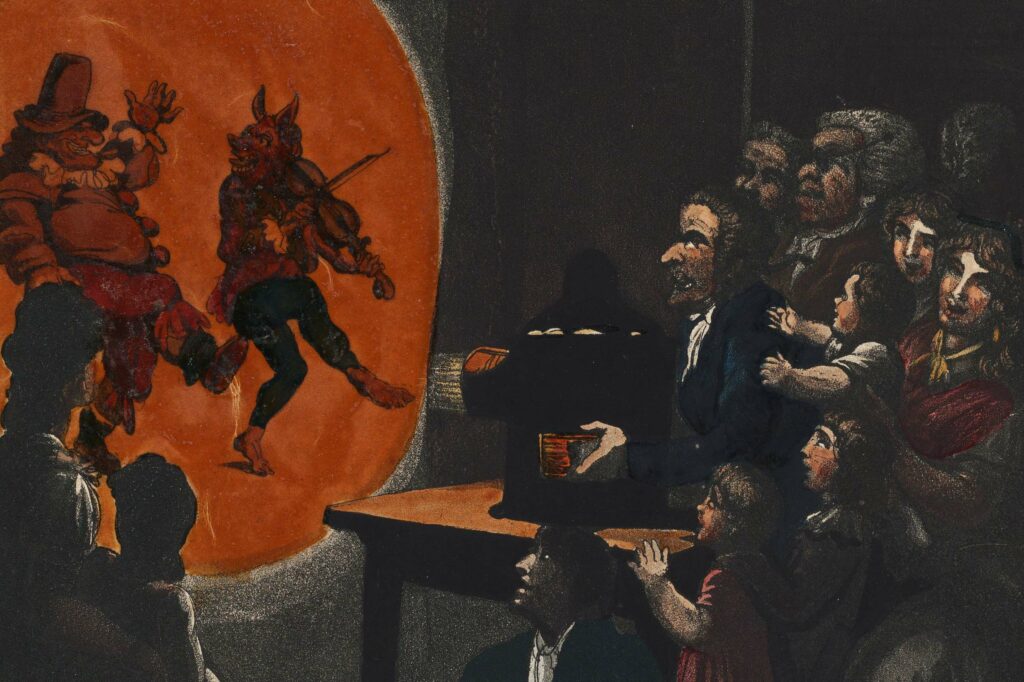
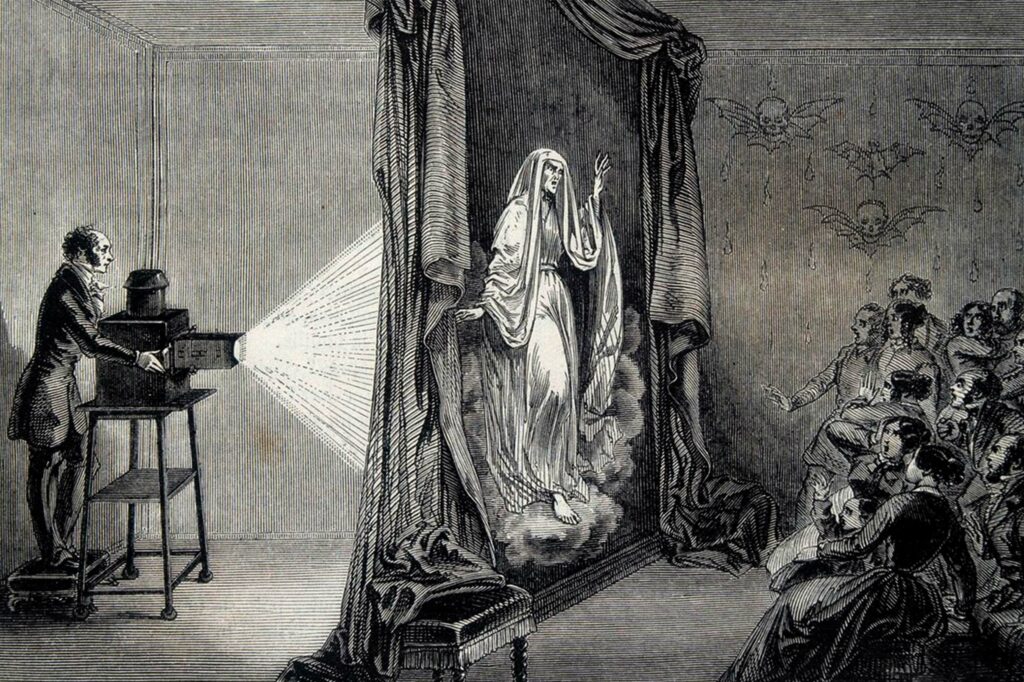
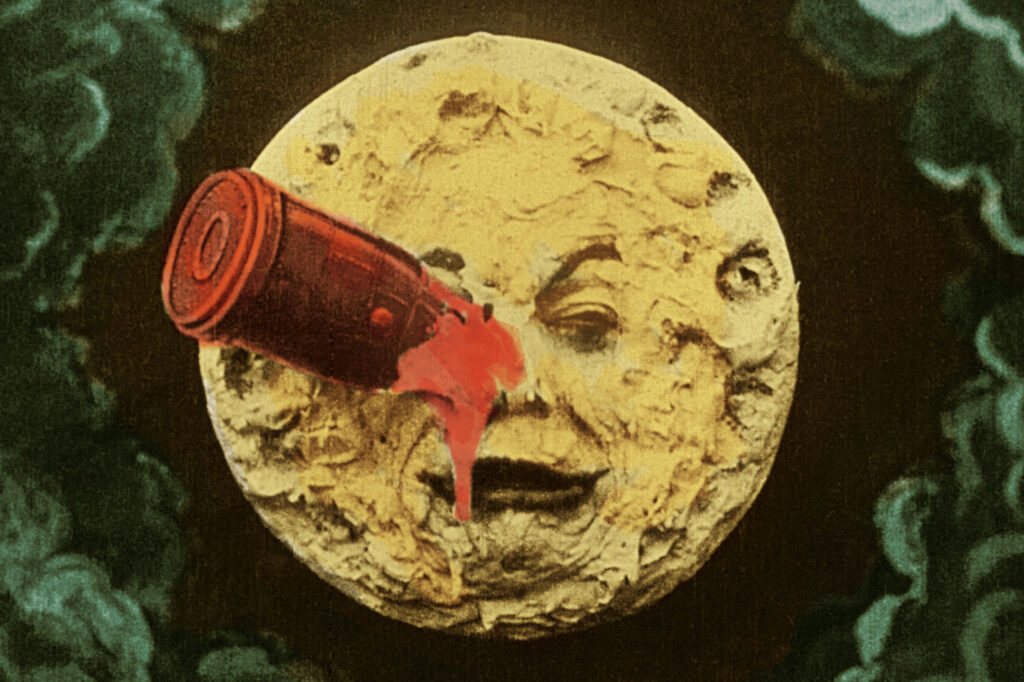
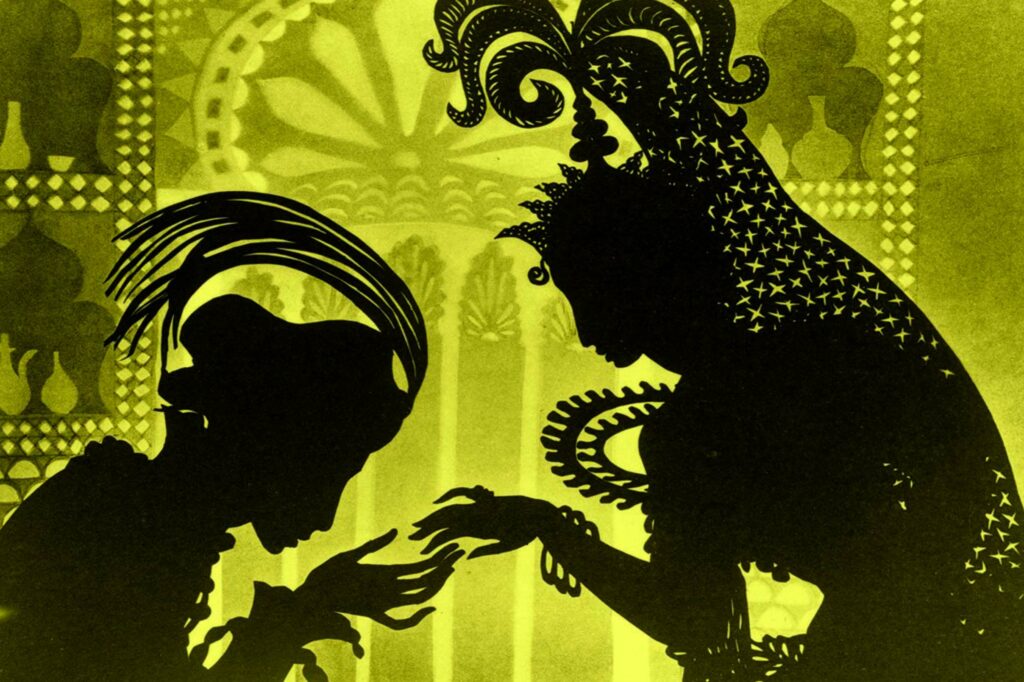
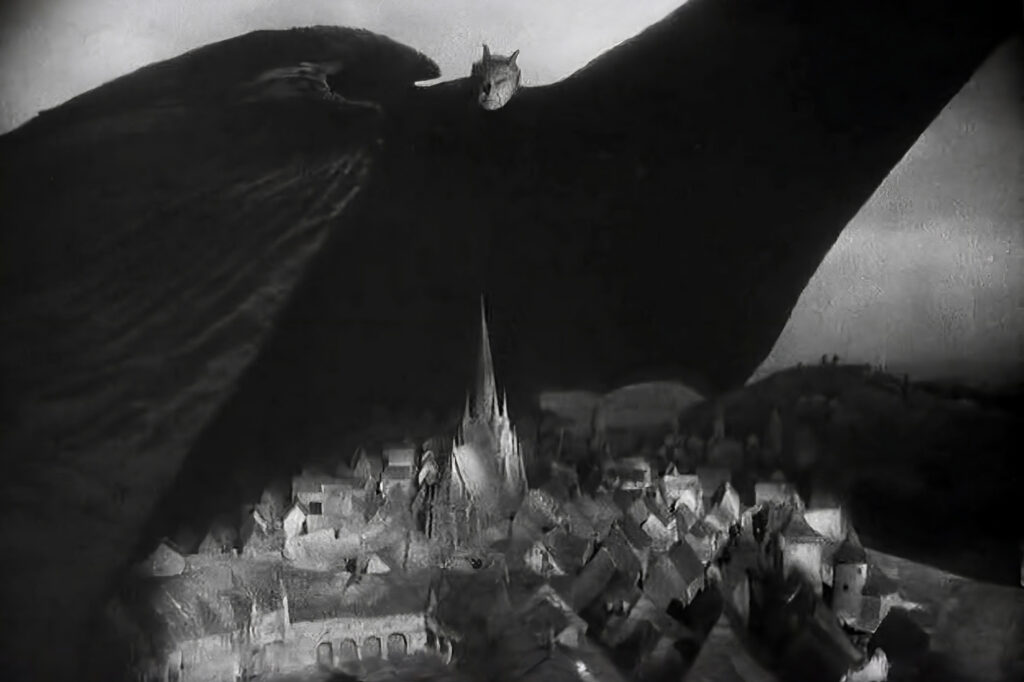
Whenever a new narrative or visual medium appears, a new impulse to represent fantastic images also emerges. Therefore, it is difficult to establish where the fantastic begins in audiovisual culture: from the first narrated epics that employed the artifices of light and painting in Antiquity, to the magic lanterns of the 18th century, passing through the theatres of mechanical inventions of the Baroque period, there are various manifestations and devices that, historically and without a specific or single point of origin, have shaped a particular perspective towards the fantastic. From the perspective of media archaeology studies, and following authors such as Francisco Javier Frutos Esteban and Ramón Mayrata, it can be stated that ancient optical, catoptric and theatrical spectacles, as well as phantasmagorias and the earliest photographic practices, had already transformed the image into a means of “spectralisation” for representing the Fantastic. All of this was made possible thanks to creators such as Paul Philidor, Étienne-Gaspard Robert (Robertson), William Mumler, Elsie Wright and Frances Griffiths, among others. With the arrival of cinema, this tradition did not disappear: it was reconfigured and enhanced, especially thanks to the development of special effects and multiple animation techniques. Examples of this can be found in emblematic works such as The Cabbage Fairy (1896) by Alice Guy, A Trip to the Moon (1902) by Georges Méliès, The Electric Hotel (1908) by Segundo de Chomón, Gertie the Dinosaur (1914) by Winsor McCay, or The Adventures of Prince Achmed (1926) by Lotte Reiniger, which also celebrates its first centenary this year.

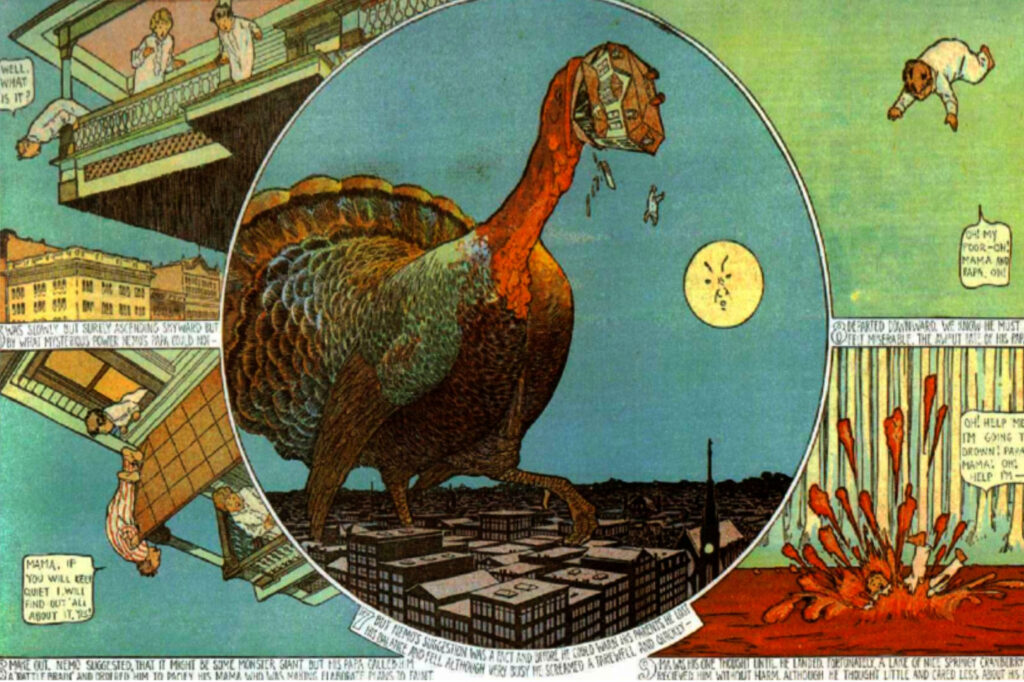
In addition to the key research carried out by authors such as Laurent Mannoni, Tom Gunning, Francesco Casetti, Siegfried Zielinski, Rosemary Jackson, Jussi Parikka and Erkki Huhtamo, media archaeology in this field has continued to grow over recent decades. Marina Warner, for example, has demonstrated how fantastic images stand as an essential part of our cultural memory, linked to the evolution of media; while Mervyn Heard has addressed the role derived from pre-cinematic spectacles in shaping the modern fantastic imagination. This panorama, however, must also include an approach towards other media and languages, such as comics and video games, among others, as well as their connections and developments within mass culture. In the case of comics, for example, the works of Thierry Smolderen and Carlos A. Scolari have made it possible to place their origins within a nineteenth-century tradition of narrative imagery in which caricature, serial illustration and the first graphic reproduction devices converge, creating from their beginnings a space favourable to the representation of the fantastic. In the field of video games, meanwhile, genealogical approaches by authors such as Mark J.P. Wolf and Andrew Reinhard, among others, have placed their origins in the convergence between play, simulation and audiovisual experimentation, incorporating, from their earliest stages, impossible elements and forms of interaction with the fantastic that extend and transform previous traditions of the image.

Within its broad spectrum, the abstracts submitted for this main thematic line may follow variations such as the following:

1) Research and theoretical reflection on the origins of the fantastic genre in cinema (live action, animation, experimental cinema, etc.) or in its pre-cinematic antecedents: trends, movements, works, and outstanding male and female authors.

2) Research and theoretical reflection on the origins of the fantastic genre in visual and audiovisual culture in a broader sense, covering the early stages of media such as visual arts, theatre, photography, comics, television, role-playing games or video games, among others.

3) Research and theoretical reflection on the origins of the fantastic genre in visual and audiovisual culture, focusing on its relationship with the various technological systems and processes (magic lantern projections, photochemical treatments of celluloid, early animation methods, first digital environments, etc.), as well as the influence they may currently exert.

4) The origins of the fantastic genre in visual and audiovisual culture as a tool for communication, education, reflection or social and political analysis.

OPTION 2

In this modality, the proposals submitted will follow the generic thematic line of the Congress: The fantastic genre and its possible interconnection with the various platforms of culture, audiovisuals and new technologies.

Within its broad spectrum, the abstracts submitted for this generic thematic line may follow variations such as the following:

1) Research and theoretical reflection on the fantastic genre in its various forms of expression: trends, movements, works, and outstanding male and female authors.

2) The fantastic genre and its interconnection with the various models of audiovisual culture and new technologies: the hybrid nature of the fantastic together with cinema, comics, role-playing games, video games, virtual reality, plastic arts, etc.

3) Possible methodologies and communication and/or teaching tools through platforms related to the fantastic genre.

4) The fantastic in the political context: approaches and studies where the fantastic establishes a discourse connected with social debate, collectivity and political action.

OPTION 3

In this modality, the proposals submitted will follow the following thematic line of the Congress: Synthetic Images: Strategies and Methods of Art and Visual Effects.

Within its broad spectrum, the abstracts submitted for this thematic line may follow variations such as the following:

1) Proposals from visual arts and digital culture: precedents, current creations, artistic movements, studies, curatorships, outstanding male and female authors, etc.

2) Hybridisations and ramifications of visual arts and new technologies: connections between genres, media and platforms (cinema, comics, music videos, video art, etc.). Cases of intertextuality, pastiche, self-reference and other phenomena of modern and postmodern creation.

3) Tools and processes of digital production and contemporary art: artistic, social and technological trends; their development in the context of the Internet and online communities; their evolution in the scenario of new Virtual/Augmented Reality technologies, mobile and interactive devices, Artificial Intelligence (AI), etc.

4) Communication, marketing and/or teaching methodologies through platforms related to visual arts and digital art.

ABSTRACT SUBMISSION

The abstracts and their respective oral presentations may be submitted in English, Spanish, French or Valencian; and their presentation during the Congress must not be shorter than 5 minutes or exceed 15 minutes.

The oral presentation at the Congress will not be compulsory for those who only wish to participate with their proposal as a book chapter. Likewise, participation in the publications will not be compulsory for those who only wish to participate with an oral presentation. The presentation of posters is not contemplated.

If a participant wishes to participate simultaneously in more than one modality, each proposal must be submitted independently to: congreso@festivalcinefantaelx.com

Each proposal must be sent to this email address with two PDF files attached:

1) METADATA file:

Available at this link. It must be completed with the personal details of the communicator(s). The file must be named, according to the selected modality, as follows:

A_METADATA_OPTION_1_Title.
A_METADATA_OPTION_2_Title.
A_METADATA_OPTION_3_Title.

The word “Title” should not be written literally; instead, three words from the title of the proposal should be used, separated by underscores. For example:

A_METADATA_OPTION_2_History_archetypes_fantasy

2) ABSTRACT file:

Available at this link. This document will contain the abstract of the presentation and must not include any personal details of the communicator(s), as it will be evaluated through the double-blind peer review system by the Scientific Committee. The file must be named following the same criteria:

B_ABSTRACT_OPTION_1_Title.
B_ABSTRACT_OPTION_2_Title.
B_ABSTRACT_OPTION_3_Title.

The deadline for submitting abstracts is 20 September 2026 (inclusive).

PARTICIPATION OPTIONS AND FEES

OPTION 1: TIRANT LO BLANCH PUBLISHING HOUSE


This registration fee is 190€ per author, and includes:


1) Presentation of the oral communication at the Congress (online or in person).

2) Presentation and Attendance Certificate.

3) Proceedings book with ISBN.

4) Academic publication by Tirant Lo Blanch publishing house through a book chapter in Spanish, with ISBN, printed edition and delivery of a printed copy to each author. The research monograph will have a Scientific Committee, Review Committee and double-blind peer review evaluation.


OPTION 2: UNIVERSITY OF SALAMANCA EDITIONS


This registration fee is 170€ per author, and includes:


1) Presentation of the oral communication at the Congress (online or in person).

2) Presentation and Attendance Certificate.

3) Proceedings book with ISBN.

4) Academic publication in University of Salamanca Editions through a book chapter in Spanish, with ISBN and in Open Access format. The research monograph will have a Scientific Committee, Review Committee and double-blind peer review evaluation.


OPTION 3: PETER LANG PUBLISHING HOUSE


This registration fee is 220€ per author, and includes:


1) Presentation of the oral communication at the Congress (online or in person).

2) Presentation and Attendance Certificate.

3) Proceedings book with ISBN.

4) Academic publication by the international Peter Lang publishing house through a book chapter in English, with ISBN, printed edition and delivery of a printed copy to each author. The monograph will have a Scientific Committee, Review Committee and double-blind peer review evaluation.

Each thematic line is linked to a specific publishing house and its corresponding participation fee. Therefore, the choice of an option determines the publishing house in which the book chapter will be published. For example, those participating in Option 1 will publish their chapter in the book edited by Tirant Lo Blanch. Consequently, it is not possible to select a different publishing house from the one linked to the chosen participation option. This is a system intended to guarantee editorial coherence within each of the publications.

ACCEPTANCE OF THE PROPOSAL AND PAYMENT OF THE FEE

The acceptance of each proposal by the Scientific Committee will be based on its suitability for the thematic lines of the Congress, its innovative nature, its expository clarity, its ethical and scientific rigour, as well as compliance with these guidelines.

The notification of acceptance or rejection of each proposal will take place on 28 and 29 September 2026. Each participant will receive by email the corresponding decision regarding their proposal or proposals (please check your Spam folder, in case the message is redirected there).

Once the proposal or proposals have been accepted, each participant must pay the corresponding participation fee.

The payment period for the registration fee is from 28 September to 6 October 2026 (both inclusive), following the instructions that will be provided by email. Once the payment has been made, the amount of the fee will not be refunded.

REQUEST AND ISSUANCE OF INVOICES: once payment has been made, the corresponding invoice may be requested within a maximum period of 30 days from the date of payment. To do so, an email must be sent to congreso@festivalcinefantaelx.com, indicating the billing details. The invoice will be issued in PDF format.

SUBMISSION OF PRESENTATION MATERIALS (ONLINE AND IN PERSON)

ONLINE PARTICIPATION:

A video must be submitted in English, Spanish, French or Valencian. The duration of the presentation must not be shorter than 5 minutes or exceed 15 minutes. If the video exceeds 15 minutes, it will be returned to the participant so that the corresponding time adjustments can be made.

Videos containing only written text or visual elements without oral or audiovisual intervention by the presenter will not be accepted. The presence of the author is required, either through image or audio. Therefore, the presentation must be recorded with the person in front of the camera or through a mixed format combining an on-camera presentation with a slideshow.

If external fragments of audiovisual works (films, series or other similar materials) are included, extracts from the same content exceeding 20 seconds must not be used, as their publication on our YouTube channel may be affected due to copyright issues detected by the platform.

For the production of the video, no specific template provided by the Congress should be used. The video must be recorded in horizontal format, with appropriate lighting and good sound quality (well-lit spaces, with low reverberation and minimal background noise). The recording may be made using any tool (Google Meet, Zoom, Microsoft Teams, etc.). The final file must preferably be delivered in .mp4 or .mov format, and in HD quality (1920×1080).

The deadline for submitting the video is 8 November 2026 (inclusive).

IN PERSON PARTICIPATION:

It is reminded that the in person format oral presentation may be given in English, Spanish, French or Valencian; and its presentation during the Congress must not be shorter than 5 minutes or exceed 15 minutes.

The material for projection at the Auditorium of the Congress Centre “Ciutat d’Elx” must be sent, or provided through a download link, to the email address congreso@festivalcinefantaelx.com, in order to carry out the relevant technical tests.

For the preparation of the material (PowerPoint slides, Canva…, videos, images, etc.), no specific template provided by the Congress should be used.

The deadline for submitting the materials is 13 November 2026 (inclusive).

SUBMISSION OF BOOK CHAPTERS (PUBLICATION GUIDELINES AND TEMPLATES)

The submission of the text, intended for publication as a book chapter, is voluntary. Once submitted, it will enter the editorial and evaluation process, and therefore it may not be withdrawn.

It is recommended that the title of the chapter be different from the title of the oral presentation submitted. Under no circumstances may the contents or the object of the research be modified.

In any of the three participation options, chapters must not exceed 4.000 words (including footnotes and final bibliographic references).

To facilitate the review and layout process, texts must be written exclusively using the corresponding Word template for the selected publishing house (PDF files or compressed folders containing different files will not be accepted). Each template includes details regarding the typographical guidelines, citation system, bibliographic references, number and dimensions of figures, etc., for each publishing house:

OPTION 1 (TIRANT LO BLANCH PUBLISHING HOUSE): the chapter must be written obligatorily in Spanish using the Word template available at this link.

OPTION 2 (UNIVERSITY OF SALAMANCA EDITIONS): the chapter must be written obligatorily in Spanish using the Word template available at this link.

OPTION 3 (PETER LANG PUBLISHING HOUSE): the chapter must be written obligatorily in English using the Word template available at this link.

Therefore, personal templates or styles should not be used, as those provided are adapted to the requirements of each publishing house. Texts that do not comply with the editorial guidelines indicated in the corresponding template will be returned for adaptation before beginning the evaluation process or, where applicable, will not be accepted for publication.

Policy on the use of Artificial Intelligence (AI) in the writing of book chapters: AI tools may only be used as support for auxiliary tasks, such as assistance in reviewing references or adapting to the guidelines of each publishing house. AI may not replace academic judgement in the development of hypotheses, analysis, interpretation of results or conclusions. The Scientific Committee reserves the right to review the use of AI and request any clarifications it deems appropriate to guarantee academic integrity, scientific quality and compliance with this policy.

Each signing author will retain copyright over their chapter. However, by submitting the manuscript for publication, they will grant the corresponding publishing house the necessary rights for its editing, distribution and dissemination, the management of which will be the exclusive responsibility of that publishing house. Both the authors and the Organising Committee of the Congress expressly waive any financial compensation derived from the publication of the work.

The chapter must be sent to the email address congreso@festivalcinefantaelx.com

The deadline for submitting book chapters is 10 January 2027 (inclusive).

KEY DATES

– Deadline for submitting abstracts: 20 September 2026 (inclusive).

– Date of notification of acceptance or rejection of submitted abstracts: 28 and 29 September 2026.

– Date for payment of the registration fee: from 28 September to 6 October 2026 (both inclusive).

– Deadline for submitting materials for online participation: 8 November 2026 (inclusive).

– Deadline for submitting materials for in person participation: 13 November 2026 (inclusive).

– Date of the Congress, held within the framework of the Festival: 17, 18, 19 and 20 November 2026.

– Deadline for submitting book chapters for evaluation and publication: 10 January 2027 (inclusive).

Este sitio web utiliza cookies para que usted tenga la mejor experiencia de usuario. Si continúa navegando está dando su consentimiento para la aceptación de las mencionadas cookies y la aceptación de nuestra política de cookies, pinche el enlace para mayor información.plugin cookies

ACEPTAR

Aviso de cookies